
Reading time: Approximately 10 minutes
Every day, billions of products move through factories, warehouses, distribution centers, retail stores, hospitals, and logistics networks. Behind many of these operations is a technology that most people never notice but rely on every single day: RFID.
Although RFID has existed for decades, its adoption is accelerating faster than ever. Global retailers, manufacturers, healthcare providers, and logistics companies are investing heavily in RFID to improve visibility, increase efficiency, reduce errors, and automate operations.
But have you ever wondered what actually happens before an RFID tag reaches a product? Or what happens after it is applied?
Let’s take a journey through the complete RFID ecosystem.
It All Starts with a Business Challenge
Every RFID project begins with a problem.
A retailer wants accurate inventory.
A manufacturer wants better production visibility.
A hospital wants to track medical equipment.
A logistics company wants to know exactly where shipments are at any moment.
RFID is never the objective itself. It is the technology that helps solve real operational challenges.
Designing the Right RFID Solution
Once the business need is understood, engineers begin designing the solution.
This includes selecting the appropriate RFID technology, determining where tags will be placed, choosing readers and antennas, and planning how the collected data will integrate with existing business systems.
Every application is different. A fashion retailer has very different requirements than an automotive factory or a pharmaceutical warehouse.
Choosing the right solution at the beginning often determines the success of the entire project.
Manufacturing the RFID Tag
This is where the physical journey begins.
An RFID tag may look simple from the outside, but it combines precision engineering with advanced manufacturing.
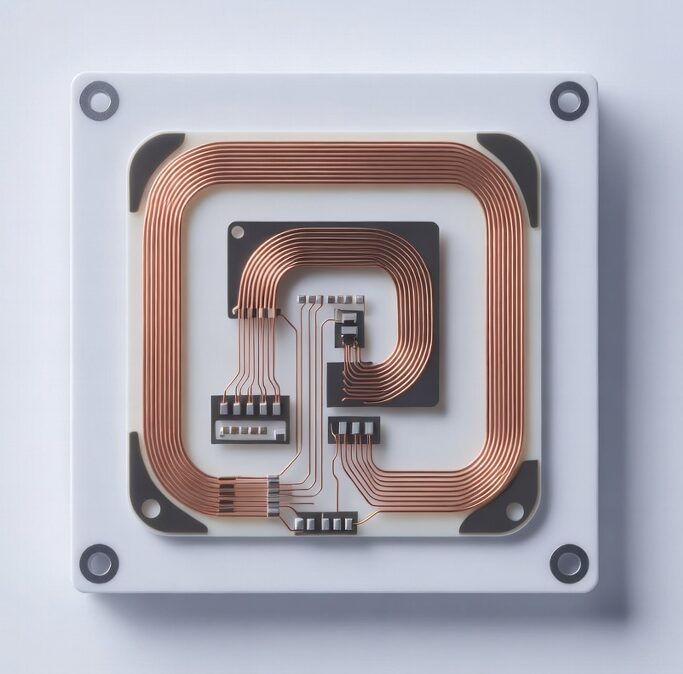
A tiny silicon chip is connected to a specially designed antenna, creating what is known as an RFID inlay.
The inlay is then laminated, converted into labels or tags, tested, encoded, and carefully inspected before leaving the production line.
Billions of RFID tags are manufactured every year, each one capable of carrying its own unique digital identity.
Quality Makes the Difference
Producing an RFID tag is only part of the process.
Every tag must perform consistently.
Manufacturers conduct multiple quality checks to verify read performance, encoding accuracy, and overall reliability before products are shipped.
Quality is becoming increasingly important as RFID expands into industries where failure is simply not an option, including healthcare, aviation, pharmaceuticals, and food supply chains.
Applying RFID to Products
Once manufactured, RFID tags are attached to products, cartons, pallets, reusable assets, or equipment.
Some tags are hidden inside packaging.
Others are embedded directly into products during manufacturing.
The goal is simple.
Every tagged item receives its own unique identity, allowing it to be recognized automatically throughout its entire lifecycle.
Reading the Invisible
Unlike traditional barcodes, RFID does not require direct line of sight.
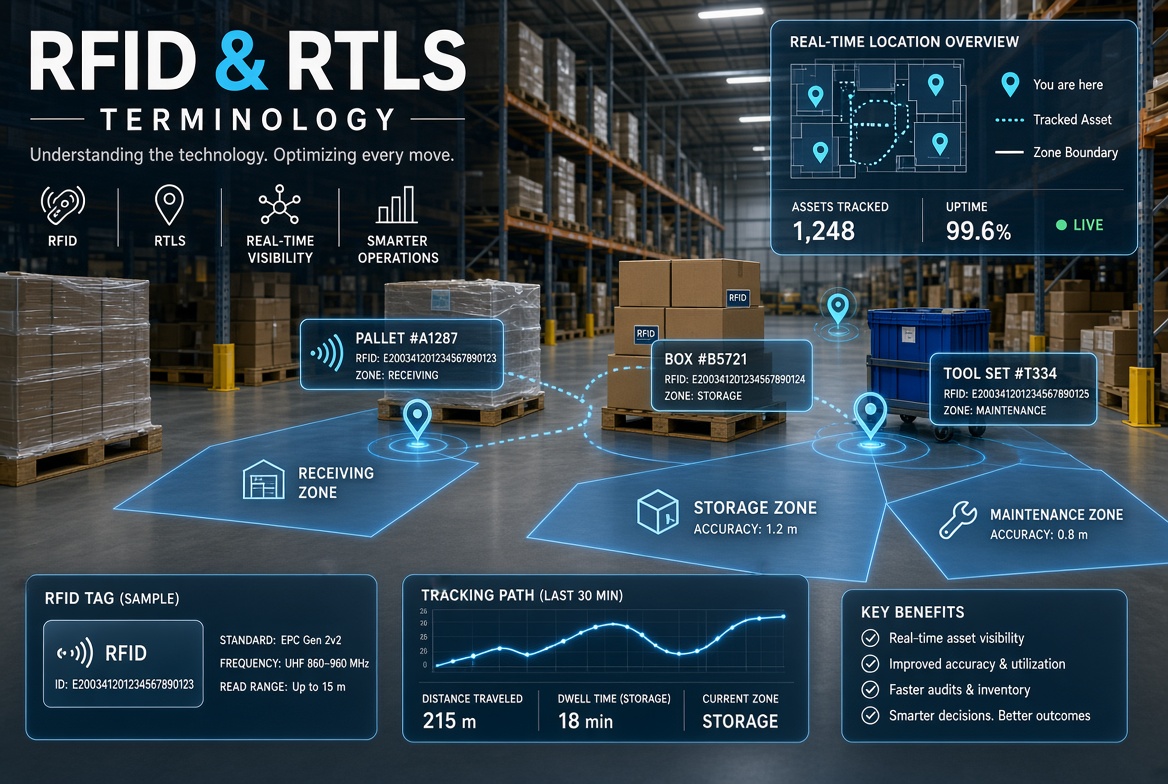
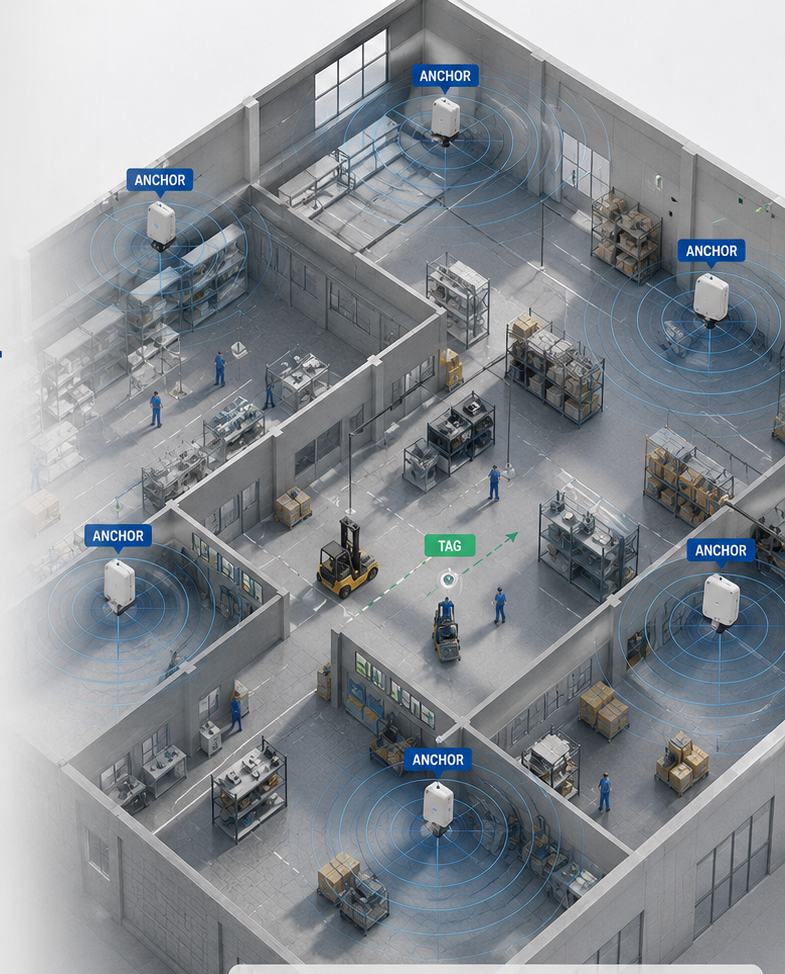
Readers installed at warehouse doors, production lines, retail entrances, conveyor systems, or handheld devices communicate wirelessly with RFID tags.
Hundreds of items can often be identified within seconds, making inventory counts dramatically faster and reducing manual work.
This ability to capture information automatically is one of RFID’s greatest advantages.
Turning Data into Business Intelligence
Reading a tag is only the beginning.
The real value comes from the information generated.
Every RFID event tells a story.
Where was the product?
When was it seen?
Has it arrived?
Has it left the warehouse?
Has it been sold?
This information flows into business systems such as ERP, WMS, or MES platforms, helping companies make better decisions based on real-time data instead of assumptions.
Where RFID Creates Value
Today, RFID supports far more than inventory management.
Retailers improve product availability and customer experience.
Manufacturers gain better production visibility.
Hospitals locate critical medical equipment within seconds.
Logistics providers automate receiving and shipping.
Airlines track baggage more accurately.
Industrial companies monitor valuable assets and tools.
As RFID continues to evolve, new applications continue to emerge across almost every industry.
Looking Beyond RFID
The future is not about RFID working alone.
Modern solutions increasingly combine RFID with sensors, cloud platforms, artificial intelligence, computer vision, and Industrial IoT technologies.
Together, these technologies create smarter factories, connected warehouses, and more transparent supply chains.
The result is not simply better tracking.
It is better decision making.
Why RFID Matters More Than Ever
Global supply chains are becoming more complex.
Customer expectations continue to rise.
Businesses are expected to move faster, reduce waste, improve sustainability, and deliver greater accuracy than ever before.
RFID helps make all of this possible.
It provides visibility where there was uncertainty.
Automation where there was manual work.
And confidence where decisions once relied on estimates.
As adoption continues to accelerate worldwide, RFID is no longer just an emerging technology.
For many industries, it is becoming essential infrastructure.
Final Thoughts
The journey of an RFID tag is much more than a manufacturing process.
It is a journey that connects engineering, manufacturing, software, automation, and business operations into one intelligent ecosystem.
From a tiny silicon chip to billions of connected products moving across global supply chains, RFID continues to transform the way organizations operate.
Understanding this journey is the first step toward understanding the true value that RFID can bring to any business.
Written by
Burhan Zenger
Founder & RFID Technology Consultant
Zenger RFID
We’d Love to Hear Your Thoughts
Where do you believe RFID will create the greatest impact over the next five years?
Will it be retail, manufacturing, healthcare, logistics, or an entirely new industry?
Share your thoughts and join the conversation.


Leave a Reply